
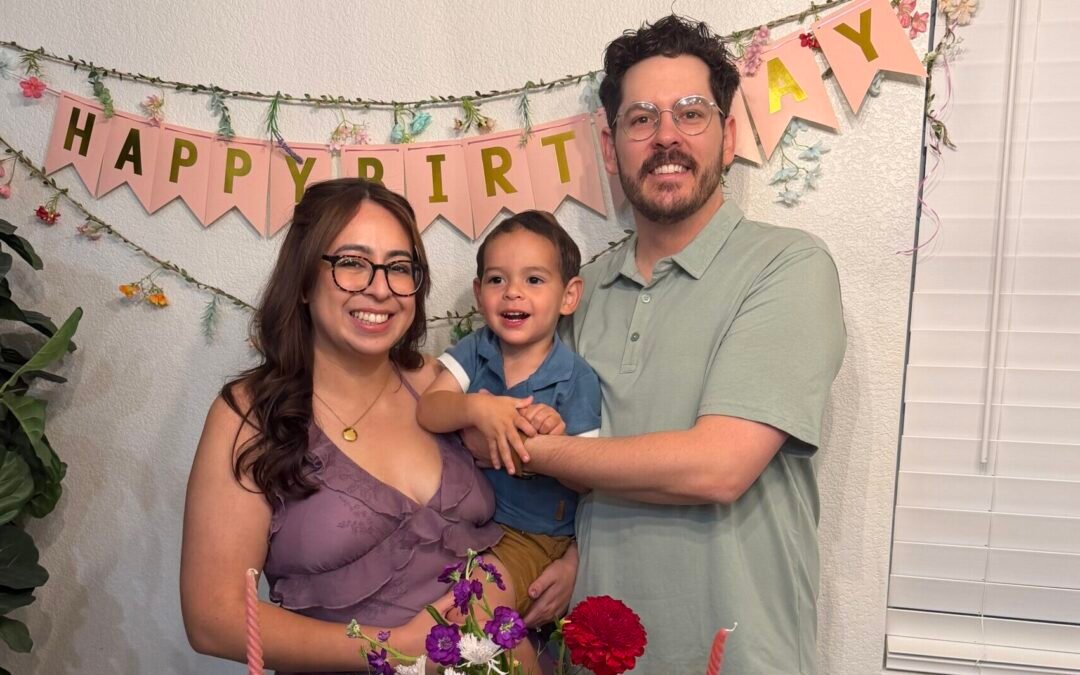
In this dialogue, RPL’s Rowan Wilson sits down with Kameron Conley, founder of Reborn Consultants, whose journey from an IHOP brainstorm at 18 to running a strategy-driven marketing agency reimagines what it means to build clarity, community, and creativity in business.
From making banana pancakes for his two-and-a-half-year-old son in Las Vegas to guiding clients through levels of their own growth, Kameron’s story challenges the assumption that marketing is about packages and templates—while offering a vision of business rooted in collaboration, presence, and persistent, purposeful action.
Rowan: Kameron, thanks so much for making the time this morning—I know you’re just coming off making banana pancakes for your little one. Before we dive in, I’d love to hear how you’re doing and what life looks like for you out in Vegas right now.
Kameron: I’m great. I just finished making banana pancakes for my two-and-a-half-year-old boy. And yeah, work starts now since I’m on the West Coast.
Rowan: That sounds like a beautiful way to start the day. I know a lot of the west has been dealing with wildfire smoke lately—my parents are actually heading to a wedding in Idaho tomorrow, and the forecast is just smoke all week. How’s it been where you are?
Kameron: No smoke. It’s actually really beautiful—just hot. Like 110, 113. The desert. I know Chicago had some bad weather, and Colorado, Utah, Idaho, and California all got hit with smoke.
Rowan: So, Kameron, I’d love to start at the beginning. How did you get into web design and marketing? When did this start, and what drew you to it?
Kameron: There are two parts to that. The first is that I started a clothing brand when I was 18. I went to an IHOP with an old high school friend—he was in band, I was in orchestra, and we’re still friends to this day. We started a Christian clothing line, set up a website, made a bunch of money, and then had no idea what to do with it. We didn’t know about shipping, taxes, or anything on the back end. That led me to understand that the back end is a whole different business in itself.
Then I went through a ton of other things before landing at an agency. I worked in food and beverage here in Vegas, then moved away and ran a youth symphony in Utah. After that, I was a traveling salesperson, worked at a college, and eventually took an entry-level position at an agency. From there, a friend and I decided to start our own. So the journey to where I am today was completely opposite of what I anticipated—I thought I was just going to go to college and become a teacher. So when you ask how I got here, it’s completely random.
Rowan: Yeah, but it seems like even from 18, or maybe earlier, there was something creative driving you. Is that true? Was the clothing thing driven by creativity?
Kameron: A little bit. That’s so funny—I know now that I’m creative, but years ago I would have said I wasn’t. I played viola and cello since sixth grade, so I had creative aspects, but when it came to drawing or depicting things, that wasn’t my focus.
What drew me to websites and to what I do today—consulting, designing, and figuring out acquisition channels—is the strategy behind it. Creating a clear roadmap. Clarity means more to me than the design itself. But I know good design is what helps the people trying to reach out feel like they’re in the right place, feel familiar, and trust you.
Clarity, Storytelling, and the First Five Seconds
Rowan: That’s really interesting—this idea of clarity. It seems obvious when I think about it, but it’s not something I necessarily think about when I’m thinking about websites. Can you speak to that a little bit and what it means when you’re working with people?
Kameron: There are three elements. When I get to a website, in the first five seconds I need to know exactly what you do. Can I understand it like a fifth grader? Meaning, I don’t know a lot about the world, but I have words in my head and I can pick up on context clues. If people can’t do that, they’ll immediately leave and find somebody else.
You guys say you’re storytellers. I feel like we’re guiding the story more than telling it. We’re trying to move people from one section to the next in a way that feels chronological. So I ask: Does it make sense in five seconds? Is the design clean and user-friendly? Does everything work the way it should when you click? And is there information I can get to quickly—like a clear call to action?
When I look at websites, I look at them from a very basic standpoint. I think we overcomplicate things. The best thing you can do is ask the people coming to your website what they’re actually looking for. Clarity is what makes marketing, your website, and success easier. When you’re not clear—”oh, I do all these 20,000 things”—people are going to say, “okay, I’ll never remember that one person.”
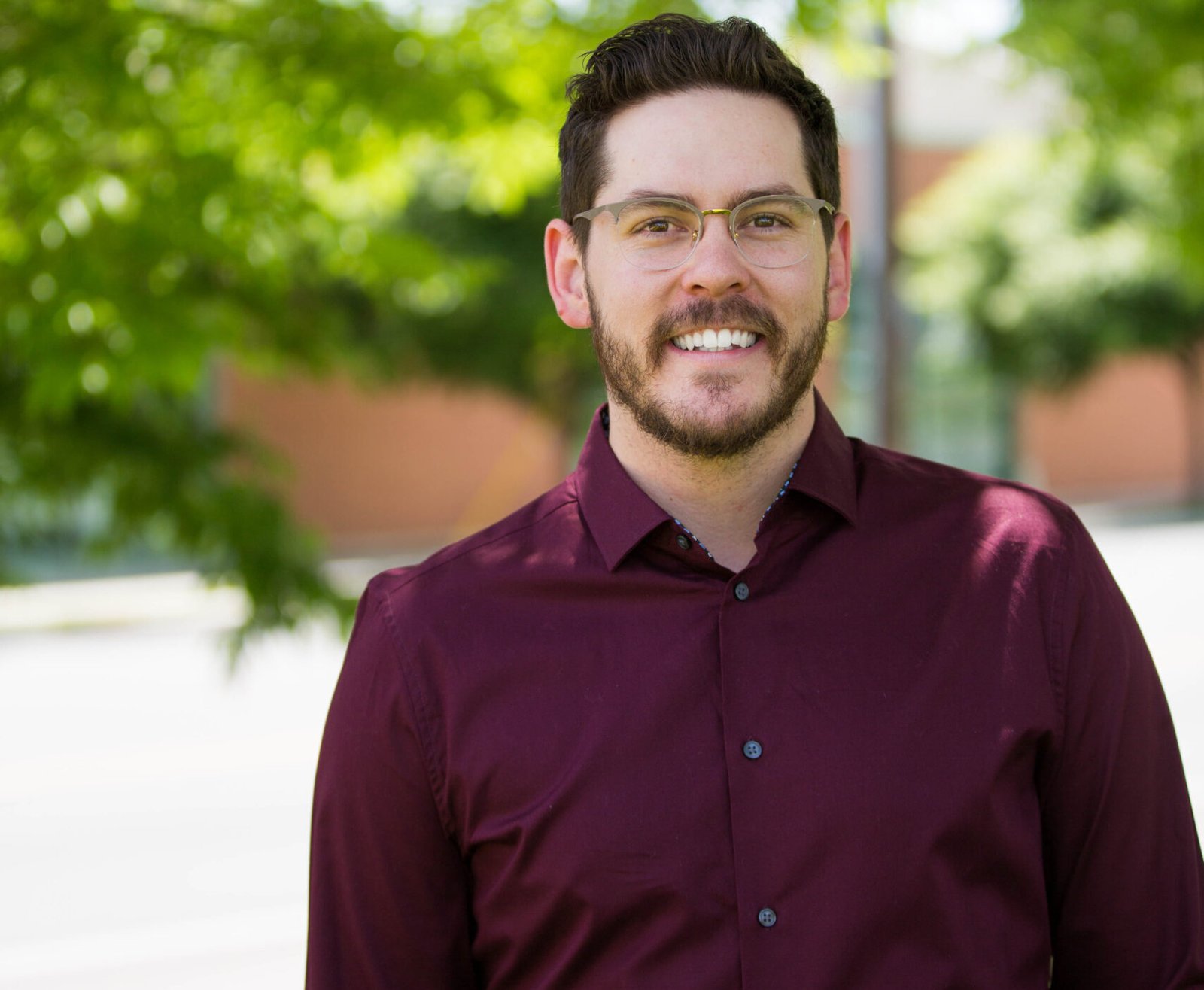
Kameron Konley
Only Dead Fish Go With the Flow
Rowan: What’s it like working with clients? Do you enjoy that? I imagine you work from home most of the time.
Kameron: Yeah, I work from home most of the time, and I love working with clients. I love helping them out and guiding their journey—figuring out where they got stuck and how to get them unstuck.
In the beginning, I’d literally walk down the street and go into businesses: “I do marketing, do you want to join?” It was so untactful—just an excited business owner saying, “Come work with me.” And I’d help them out. But there was always a missing part.
This past year especially, I love figuring out why someone is in the position they’re in. Let’s address those things and get your mindset back on track. People often have a bad mindset rooted in a bad experience—something that happened and now they feel a certain way.
So, do I love working with clients? Absolutely. I love seeing their family grow. I love seeing them grow. I love seeing the business grow—new people, new products. The goal is not to stay stagnant. One of the first T-shirts I ever made for that clothing company said, “Only dead fish go with the flow.” I feel strongly about that. We’ve got to be swimming upriver or downriver, but we’ve got to keep going. You can’t just go with the flow, because you have to push against things to take risks and create opportunities.
Rowan: I love that—only dead fish go with the flow. Going back to what you said about guiding people’s stories—do you feel like you’re working with people, or do you sometimes have to push back? I’ve found that’s always difficult with clients, because sometimes they want something and you’re like, “I really don’t think this is going to work.”
Kameron: That’s a great question. In the beginning, people hired me to get something accomplished—point A to point B. Now, it’s not just A to B. It’s like, we got through A to Z, now we have to learn our numbers, then put sentences together, then start writing a book.
It’s definitely collaborative—but I need clients to understand that whoever they are, whether it’s the CEO or the business itself, that identity needs to be clear on the website. We don’t say things we think they’ll like; we say things that make sense to them.
When someone says, “oh, I love this website,” I’ll say, okay, I’m glad you like it. But will the people you’re actually attracting—the clientele, customers, patients, donors—like it? Because you could love it and they could hate it. You have to take you out of it. That’s difficult, because I’m asking them to be themselves through words that explain who they are and how they operate—that’s what makes them unique. But at the same time, the design can’t be 100% about what they love. It can’t be only for them.
If somebody says, “yo, I just want a website,” I’ll tell them they probably don’t need me. If you want something simple, I’ll give you five alternatives. But if you’re actually asking—how are we going to grow this? How do we get to the next step? How do we make more money? How do we get you out of the day-to-day as a CEO so you can be the strategist you need to be?—those are the conversations I want to have.
On Fulfillment and Unlocking Growth
Rowan: Do you find the work fulfilling?
Kameron: It’s fulfilling when all cylinders are clicking. When they do, it really does feel great, because you’re helping somebody unlock something they were stuck on.
For example—I had a client reach out and say, “Hey, I want to fundraise for my nonprofit. I want to make $10 million. I just need you to judge my landing page.” And I said, okay, your goal is $10 million, but you want me to look at your landing page? How much are you putting into this, and how much can you actually make? Truthfully, they could have made maybe a million at max—more realistically, $250,000 to $300,000. That person was so confined to thinking, “I need this one thing fixed before I can move forward.” That’s where a lot of business owners get stuck. Unlocking something that once made them feel like they had nowhere to go—that’s fulfilling.
It’s cool to see clients making sales on an e-commerce site or seeing more form submissions come in. It’s exciting to see growth, because once you see growth, you see so many other possibilities and gain confidence. And with more confidence, you can do more.
But it takes time. They have to trust me, I have to trust them, and we have to communicate and learn together. It’s like hiring a new employee—you hope you wrote perfect instructions, but you never do. Nothing is perfect.
I took a third-level communications class that framed it this way: collaboration takes your idea and my idea and makes them one, while compromise takes a little of your idea and a little of mine and makes them one. I really focus on how we can truly collaborate. When you do that, you can truly feel fulfilled. It doesn’t happen the moment you get a client. Getting a client is just the beginning—it’s not, “oh, we finally made it.” It’s, “we’ve got so much more work to do.” And that’s the fulfilling part.
Levels of a Business, Levels of a Life
Rowan: In our current age, if you’re a business owner, you basically have to have an online presence. Has that shifted since you started this work? Just the sheer amount of online everything is now? I don’t know exactly when you started your agency.
Kameron: I started in 2019—right before COVID. I had no idea that was going to happen. Things go in waves, just like clothing from the 60s, 70s, 80s, and 90s that keeps coming back. Is digital presence important? Absolutely. But it has to be important for what you’re doing.
The first thing I tell everyone when I meet them: image and perception is what we give to the community; respect and commitment is what we give to each other. Your website, your social media—everything should look cohesive, like a real business. People judge you in five seconds now because we’re all scrolling through TikTok and Instagram. If they don’t feel something, they’re gone. As a business, if we’re putting something out there, it has to be our best effort. You don’t need 27 different social media accounts or endless outreach channels.
I’ve had companies where the website just needs to say a few key things. It’s either overly complex or overly simple—but sometimes that’s enough to get them to the next point.
That’s part of my belief that there are levels to your business, one through ten. I always use working out as the example. Level one of being healthy: stop eating dessert every day. Level two: eat a little healthier. Level three: stop eating past a certain time. Level four: start walking. Level five: go to the gym. Level six: get a personal trainer. Level ten: you know when your glucose spikes, you’re eating well, you’re sleeping right, you’re doing everything necessary for your body to be optimal.
Business is the same. We need to understand where you are in your journey so you can say, “I know I’m a four—how do I get higher?” A lot of people in digital marketing say, “I have a package, and I’m going to fit you into it.” If clients don’t fit, it’s because they’re not at that place yet.
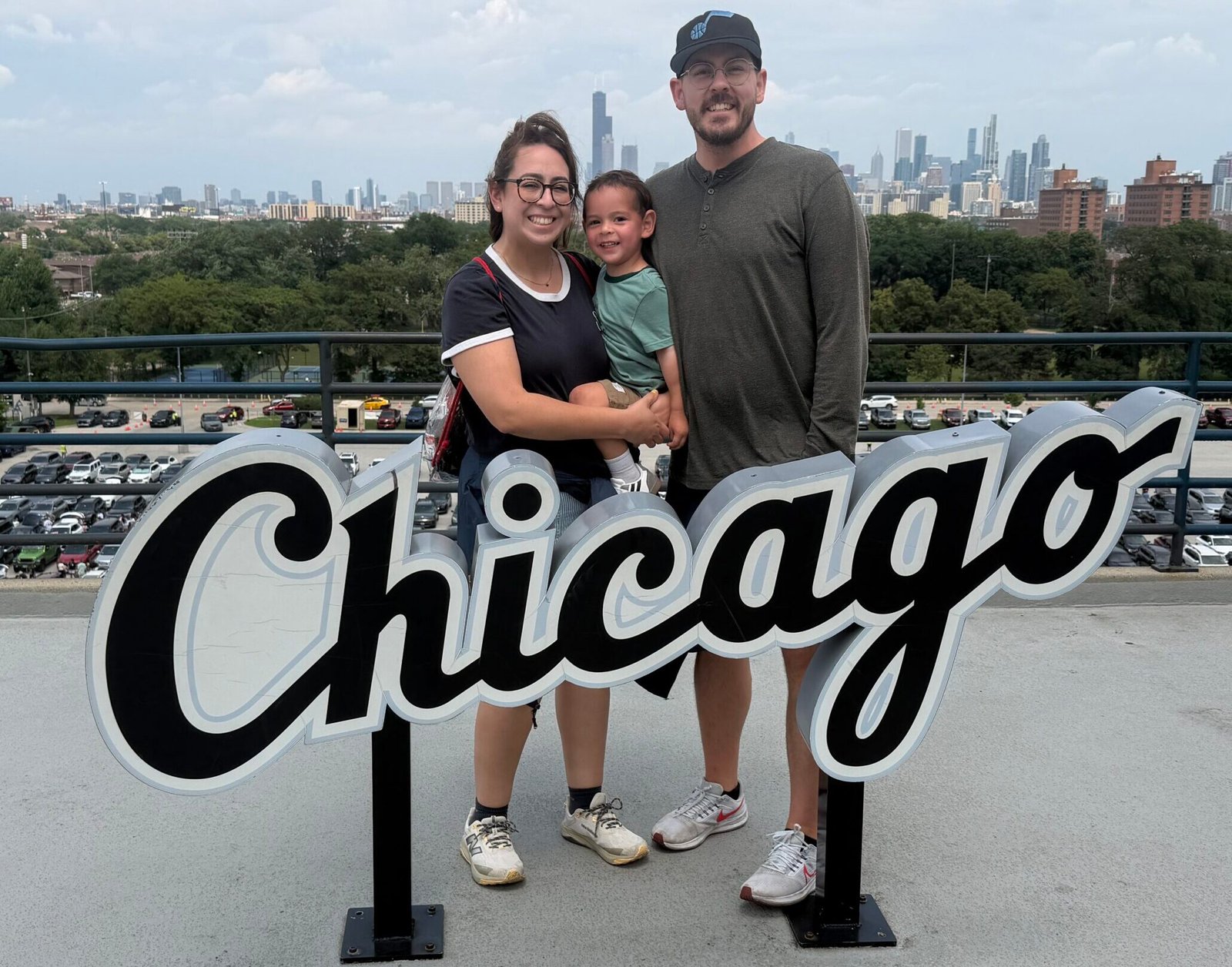
Kameron & Family
Work, Home, and Taking Off the Hat
Rowan: The way you talk about clients—you’re just thoughtful about it. One package doesn’t fit all. How has that impacted your personal life? I know you have one kid. How has that affected you as a parent, and how do your work and life overlap? I imagine part of it is working from home—being able to make pancakes at 7 a.m.
Kameron: 7 a.m., yeah. It’s interesting. When you have something this good, you don’t want to let it go. It’s hard to imagine going back to a 45-minute commute each way and losing an hour and a half.
As I’ve gotten older, what I physically do is wear a Reborn hat, and I take it off to signify that I’m done for the day. When I first started the agency—before my son, and right after he was born—I was constantly thinking about my business. You do that as a business owner. You’re always in it. But I’ve learned to say, when I’m done, I’m done. When you drive away from a job, you get 10, 15, 20, 30 minutes before you get home—a natural break to detach. At home, I didn’t have that at first; work just rolled into everything. Now I can stop when I’m done, and if I need to do more, I do it at night after my son and wife are asleep.
Being able to make pancakes for my son or go on a morning walk with him—it makes me healthier and more driven, which makes me more focused when I’m at work.
I’ve purposely stopped letting it intertwine as much. That said, I’m still judgy when we go to a restaurant and I look at a menu, or when I look at a website. I was paying my mortgage online, and the box was tiny—I could barely scroll through it. The UX design is terrible. Little things like that. It doesn’t consume me anymore; I just see businesses and how they operate a little differently. But I don’t dwell on it like I did when I was younger.
Rowan: I love the hat—taking it off as a signal to yourself and your family. Do you think there are lessons you’ve learned from working with people that you hope to pass on to your son as he gets older?
Kameron: Yeah. I used to have a business partner who said, “there are 7 billion people and there are 7 billion worlds.” We really have to keep that in mind. Each person is going through something we’ll never understand.
You’re driving and someone cuts you off, and you get angry. As I’ve gotten older, I think—that person is going through something I have no idea about. They might be rushing to see someone who’s sick, or hurrying home because of an emergency, or racing to pick up their kid to avoid a late fee. There’s so much we don’t see.
Persistence and consistency are huge. I was following up with someone recently who kept saying, “yeah, I’ll get to it.” A persistent follow-up isn’t rude or disrespectful—it’s consistently showing up. That’s the only way you’re going to get somewhere. In marketing, it takes seven to ten touchpoints for someone to purchase from you. If they buy sooner, great. Later, also great. People are preoccupied with so many things. So we have to be unique, stand out, show people we’re our own individuals—whether that’s how we dress, talk, or present ourselves.
The biggest thing—and this applies to life, clients, and colleagues—is knowing quickly who’s a good fit and who isn’t, who to keep in and who to keep out. You hear CEOs say, “hire slow, fire quick.” It’s true. We don’t have a lot of time.
As a young Kameron, I wanted to help everyone. Not in a bad way—I just thought everyone deserved help. I truly wanted to help and guide. But I learned that some people just don’t want it, and I can’t force anyone. So when I get a great employee, I take care of them and treat them right. When someone isn’t a fit, it’s okay to say, we just don’t work together. I’ve given the tools. Then I keep learning how to be more clear, honest, and transparent for the next person.
The Future of Websites
Rowan: What do you see for the future of websites? Do you think in the next five or ten years websites will stay how they are, or will there be a shift in how we use them or how they look?
Kameron: I’ll tell you what I think, though it’s not 100% certain—there’s no factual thing that says this. If we continue down the AI route, people may eventually come to a blank screen, type in something, and go directly to the place they need rather than scrolling around. That could be the pivot.
The other thing is experiential marketing—when huge brands like Coca-Cola or Pepsi create immersive environments at events like the World Cup, giving out free stuff and creating experiences you can’t have anywhere else. I think websites might need to move in that direction too—offering an experience when you visit.
Beyond that, I don’t think websites are going away. Everything’s transforming. I’ve had people say, “I stopped selling websites, it’s going to end.” I haven’t felt that at all. Everyone still needs a website. You just have to meet people where they are and where they’re trying to go. In everything, there’s always a bigger, better, faster, stronger way to integrate systems and technology. We just have to figure out how to do that effectively so people have the leg up. That’s what I see changing—because marketing is still marketing. It’s been happening forever. We just don’t always look at it that way.
Rowan: That’s wild to think about—a website being just a blank screen, no scrolling. But cool to imagine.
Kameron: Yeah, I think it’ll just take you directly to the place you want, rather than an AI prompt asking, “what can I help you with?” That could be where it goes, if that’s the direction we’re heading.
Rowan: Kameron, thank you so much. This was really interesting—and thank you also for the conversation you had with me and Robert a few months back. That really helped both of us get a better sense of where we wanted to go as a company. It’s shifted the way we brand and talk about ourselves.
Kameron: That’s good. I’m glad I was able to help. I appreciate you taking the extra minute. I hope you have a fantastic rest of your day.
Examples of his work include https://sebpepsi.com and https://lowerantelope.com
To learn more about Kameron or his work, visit https://rebornconsultants.com/.
Making Space for What Comes Next
RPL’s approach to narrative strategy draws on Spaciology, a framework that explores how the spaces we create shape our understanding, relationships, and possibilities. In our work, dialogue helps people examine their experiences, find shared meaning, and turn that understanding into clearer decisions and communications.
Bring us the question you are working through. We will start with a conversation. You can also explore Spaciology’s teachings and practices at UYM Charities.
