In this dialogue, RPL’s Robert and Rowan sit down with environmental scientist Dr. Kathleen McNary, whose doctoral research at California Institute of Integral Studies (CIIS) reimagined what it means to restore the natural world—and ourselves. From a suburban yard in Asheville, North Carolina to the estuaries of the Turks and Caicos Islands, Kathleen’s journey through “rewilding” challenges the deepest assumptions of Western culture about our place in nature.
Robert: Kathleen, welcome—we really appreciate your time today. I’d like to start by having you introduce yourself: tell us a little about what you do for a career, and then give us a snapshot of your academic research.
Kathleen: I work as an environmental scientist. My primary work involves terrestrial research for tropical and subtropical environments—mostly predicting the environmental impact of various activities that humans tend to engage in.
My academic research, which I recently completed at CIIS, focused on a way to rescript conservation practices, specifically ecological restoration. With hundreds of years of people studying the environment and trying to repair it or stop the trajectory of ecological loss, the methods we’ve used have basically proven to be pretty futile. So I tried to come up with a new way of working with the environment rather than studying on it—to treat the environment as a sentient entity, a co-researcher and co-participant in the restoration process.
Through that, I also worked on reclaiming a more authentic aspect of myself. And from a strictly conventional scientific perspective, the health of my ecological community and my own personal health increased vastly over the year I undertook this research—and it’s stayed that way. It wasn’t a one-off.
Robert: That really answered my question—this is just so exciting. So maybe describe a little about what rewilding is. We have an audience here that, ostensibly, has never heard the term at all. How would you describe it to someone who says, “Geez, this sounds interesting—what is rewilding?”
Kathleen: That’s a great question, because it’s a term used by a lot of different interest groups. It’s been passed around in conservation circles since the 1990s. Ecologically, it refers to facilitating the environment through introducing keystone species—the most famous example being the reintroduction of wolves into Yellowstone, which produced these trophic cascades of beneficial effects.
So traditionally, it means working with land and, as the human participant, helping land get what it needs to restore itself. All ecological rewilding is premised on the idea that Earth has 4.5 billion years of evolutionary intelligence and knows better than we do how to heal itself.
But the term has also come to describe how people tear away the cultural constructions they’ve accumulated over a lifetime to get to their true self—their real reason for being here. A big part of our problem is that Western culture in particular sees itself as separate from the natural world, exceptional within it, and superior to it.
Part of rewilding the self is getting rid of all that nonsense, because none of it is true. We can’t rewild the planet until we rewild ourselves.
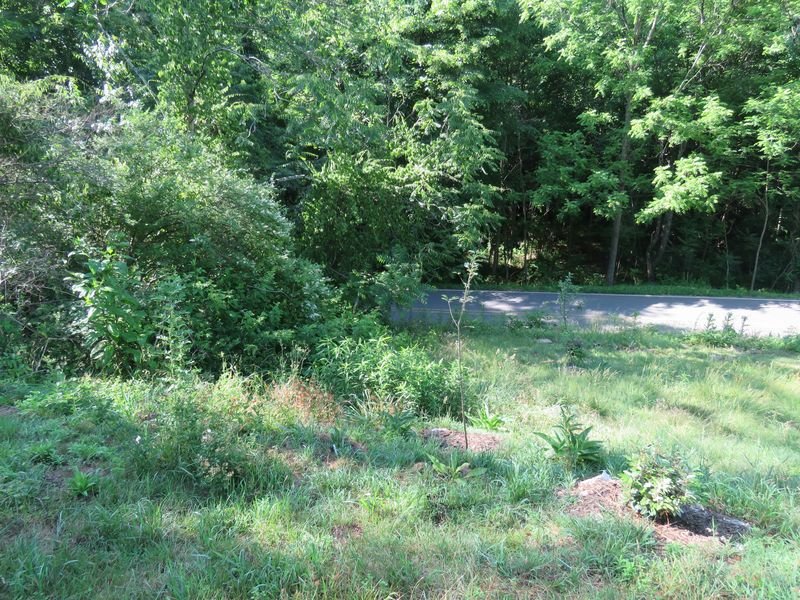
Beginning of Rewilding Project
Robert: That’s really helpful—I love how you painted that scene. So let’s explore your scene, starting with your land. Tell us what you saw happen during that year, and what you’re still seeing now. And to help timestamp this, let us know when your year-long project took place, so we can orient ourselves to how much time has elapsed.
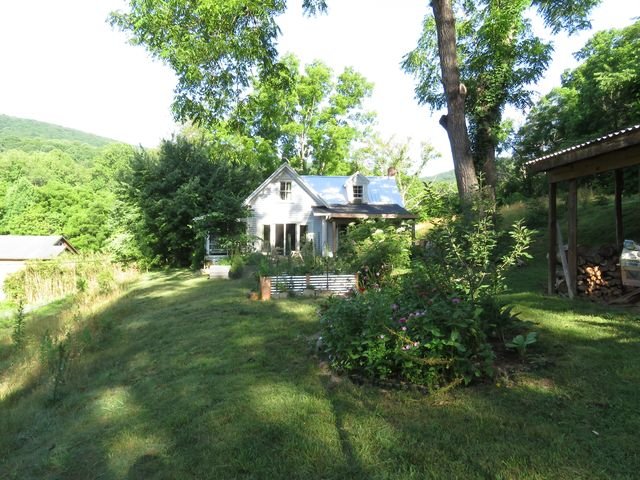
Kathleen: I started the rewilding project in spring 2022 and ran it officially for a year for my dissertation. In the beginning, the land was a pretty typical suburban yard—about two and a half acres, mostly clear-cut, with a house over 100 years old. There were a couple of really old trees that, for whatever reason, hadn’t been cut when the rest of the land was ravaged—those sentient sentinels were still there. My initial ecological assessment found it was about 50% alien invasive species and 50% native species.
By the time the year wrapped up, I had gained roughly 33% more plants. The percentage of invasive species was down several percent, and the bird population had almost doubled. New creatures moved in—foxes, a least weasel, black snakes. All of this happened as soon as I stopped trying to control things like a human landowner. It took me a while to relinquish that control, even leaving the non-native species there just to see how the land would respond. And the land responded by trying to reset balance—the native plants started crowding out the non-native ones. There’s no finish line. Everything is always moving toward more complexity and abundance.
One of my kids lives there now, and they’re having what I’d call “rewilding discomforts.” They planted a big vegetable garden and didn’t protect it, and the deer came in and ravaged all the Brassicas. There are four groundhogs living there now, and they’re voracious. It was upsetting for a while, but now my kid is realizing, “I’ve got to share this space with them and figure out a way we can all live here together.”
Humans create what they perceive to be safe spaces they can control—but that’s a delusion. Once you let go of the notion that you control anything except your own body and self, you become more comfortable with things that aren’t ideal. The deer will eat your vegetables if you don’t protect them—but it means you get to live with deer, which is a lot nicer than living without them. For a little extra work or inconvenience, we forfeit so much richness in our lives.
Robert: That’s a nice segue into looking at yourself. You talked about changes in your own mental health and how that has continued. Highlight some examples of what you experienced during the project—and whether there have been any new developments in these last few years that surprised you.
Kathleen: Let’s start with the basics of me. When I started, I had slightly elevated blood pressure and blood sugar, and a long history of chronic depression and anxiety—I’d intermittently taken Prozac throughout my adult life. The stripping-away process was not pleasant. I had to confront a lot of things I’d hidden from myself, including in my 35-year marriage, which ended during the year of rewilding. But when I came through the other side, I’d reached an optimal BMI, no longer needed antidepressants, and haven’t had clinical depression since. I have so much more energy—I just came back from an hour-long swim I thought would only be 30 minutes.
All the lessons came from just sitting back, observing, and listening. When I stripped away the noise from Western culture, it was so much easier to hear what felt real. It got to the point where going inside the house felt like entering something artificial. Outside, I felt alive.
Robert: A friend who read your dissertation said he wouldn’t believe any of it if he didn’t know you—because of all the things that happened with the animals. The owls especially stand out. Can you share that?
Kathleen: I’d never seen an owl near the land where I lived. But that autumn, when my marriage and everything was falling apart, an owl followed me home from an evening walk and set up residence at my house. Everywhere I’d go, the owls would come out and talk to me. I was dreaming about owls. The owl is a big symbol of death and rebirth. At that point, I’d still been clinging to the idea that my marriage was rescuable—and the owl was basically saying, “No, this is done. You need to rebirth yourself.” That kind of synchronicity was happening all the time once I started paying attention.
Rewilding Project in Process
Robert: You just said something I find really interesting: paying attention. In our business development world, Rowan and I work in marketing and fundraising, and it’s go, go, go—on to the next thing. What would you say to someone in our world, or out in the world, who’s intrigued by this but won’t have the chance to do a year-long project? What pearls of wisdom can you offer for them to meaningfully pay attention and rewild themselves?
Kathleen: You hit the nail on the head when you talked about not having the time, energy, or space. The capitalist Western system survives because that’s the lifestyle—if people realized they didn’t need all the crap and didn’t have to work so hard to get it, that wouldn’t be good for capitalism. The most radical thing a person can do is carve out that time, even just five minutes a day, where you find some non-human being and just sit, be there with no expectations, and create a relationship.
But there also needs to be reciprocity. A lot of the rewilding psychology books are all about what nature can do for humans—not what humans must do for nature. So do something positive: plant seeds on your balcony that attract pollinators, even something that simple. Once you start, it snowballs and cascades, and you feel really alive for the first time in a long time. Then you realize you don’t need all the things culture has told you that you need to be happy.
Robert: I’m on social media myself, and I really am myself there—you’ll see me looking out at the mountains, exploring nature. Sometimes thousands of people discover that, and folks message me to say it sparked something in them. So maybe there’s a way for you to find that balance, too. My last question: now that you have some space, nearly four years—I can’t believe it’s already been that long—is there something that genuinely surprised you about the research, the experience, or yourself? Something you sit with now and think, “I really didn’t expect this?”
Kathleen: There’s so much I could respond with. But I’d say this: even though I intellectualized that we’re all one, that we’re part of a great cosmic consciousness, I didn’t expect that I would ever be able to be content in the world. At my core, I never thought that was possible for me. But it is, and I am. Everything I thought mattered does not matter. I really know what matters now, and it’s community in all its forms—human and more-than-human. Nothing else matters if you have that. If you have that, you have everything you need.
Robert: That is super powerful, and this has been extraordinary. I feel energized and inspired. Rowan, I’d love for you to share your thoughts, too—this is the first time you’ve really been introduced to Kathleen’s work. What are you thinking and feeling?
Rowan: Thank you, Kathleen—that was incredibly cool to hear. It’s really inspiring, because like Robert said, in our line of work, it’s just go, go, go, with not a lot of time to reflect or stop. That’s one of the things Robert and I have in common: we both question that approach to life, because I don’t think it’s how we really want to be living. And your last comment about finding a way to be content—and that being part of community—really struck me. I’m going to be thinking about that all day. It gives me hope. And it’s just cool to hear someone ask, “What does matter?”—because I think we spend a lot of life focusing on the wrong things.
Kathleen: And I have to pull myself back, too. It’s easy to get wrapped up—I still have to work and support myself, and I get stressed. Yesterday was a holiday here, the King’s birthday, and it was so hot. A friend invited me to spend time in their pool, and my knee-jerk reaction was, “No, I have to finish this work.” But I was so hot that my body basically drove me there—it said, “We’re not sitting in this sweat box any longer.” And we had such a good time, doing nothing but enjoying each other’s company. I thought, Why am I resisting this? You can’t just get rid of all that programming. It’s constant work, a work in progress with no end. But it’s good to just get on the path.
Rowan: That’s another example of the pull of community. That’s something I think about a lot, too.
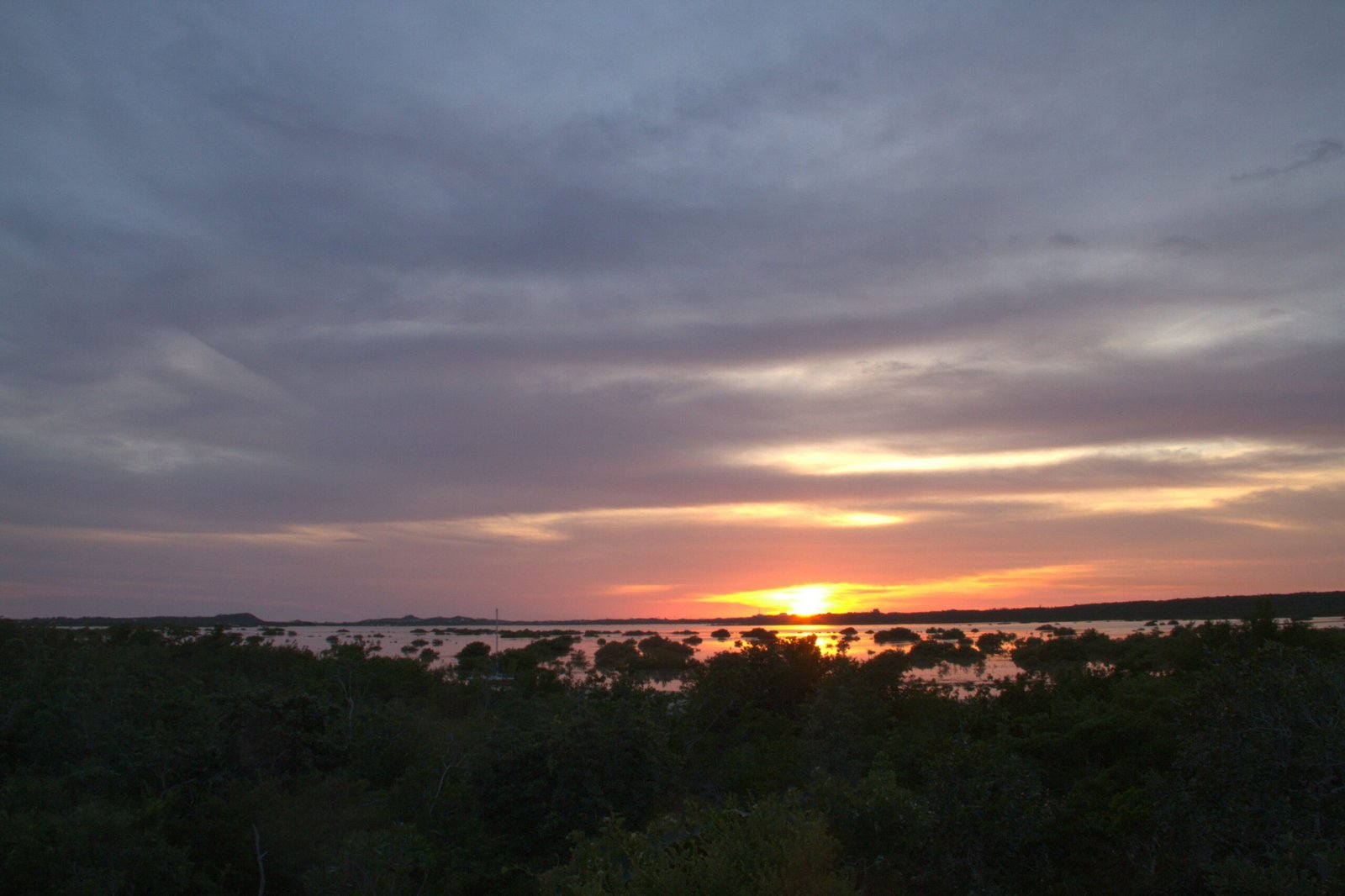
View from Kathleen’s home on Turks and Caicos Islands
Robert: For the record, Kathleen, can you tell us where you are now? It sounds like you’re not in North Carolina anymore.
Kathleen: I’m in the Turks and Caicos Islands—I’m a dual citizen, and most of my work is here because of the tropical terrestrial ecology. I live on an estuary with a canal cut into it that’s a couple of miles long, so I can swim all the way up to the ocean and back. This morning I saw a hawksbill turtle just sitting on the bottom of the canal. He looked up at me as I passed but didn’t startle. It was so great. The land I rewilded is in Asheville, North Carolina—we only carved out a little spot here and left everything else exactly as it was. It’s wild, full of wildlife and plant life. It’s amazing.
Robert: Kathleen, thank you so much for your time and for sharing all of this so openly—it’s been a genuine gift. I really hope this is just the beginning and that we get the chance to pick up this conversation again down the road. There’s clearly so much more to explore together.
To learn more about Kathleen or her work, visit https://www.yearofrewilding.com.
Making Space for What Comes Next
RPL’s approach to narrative strategy draws on Spaciology, a framework that explores how the spaces we create shape our understanding, relationships, and possibilities. In our work, dialogue helps people examine their experiences, find shared meaning, and turn that understanding into clearer decisions and communications.
Bring us the question you are working through. We will start with a conversation. You can also explore Spaciology’s teachings and practices at UYM Charities.
